Jersey Village Water Damage Restoration Process: Step by Step
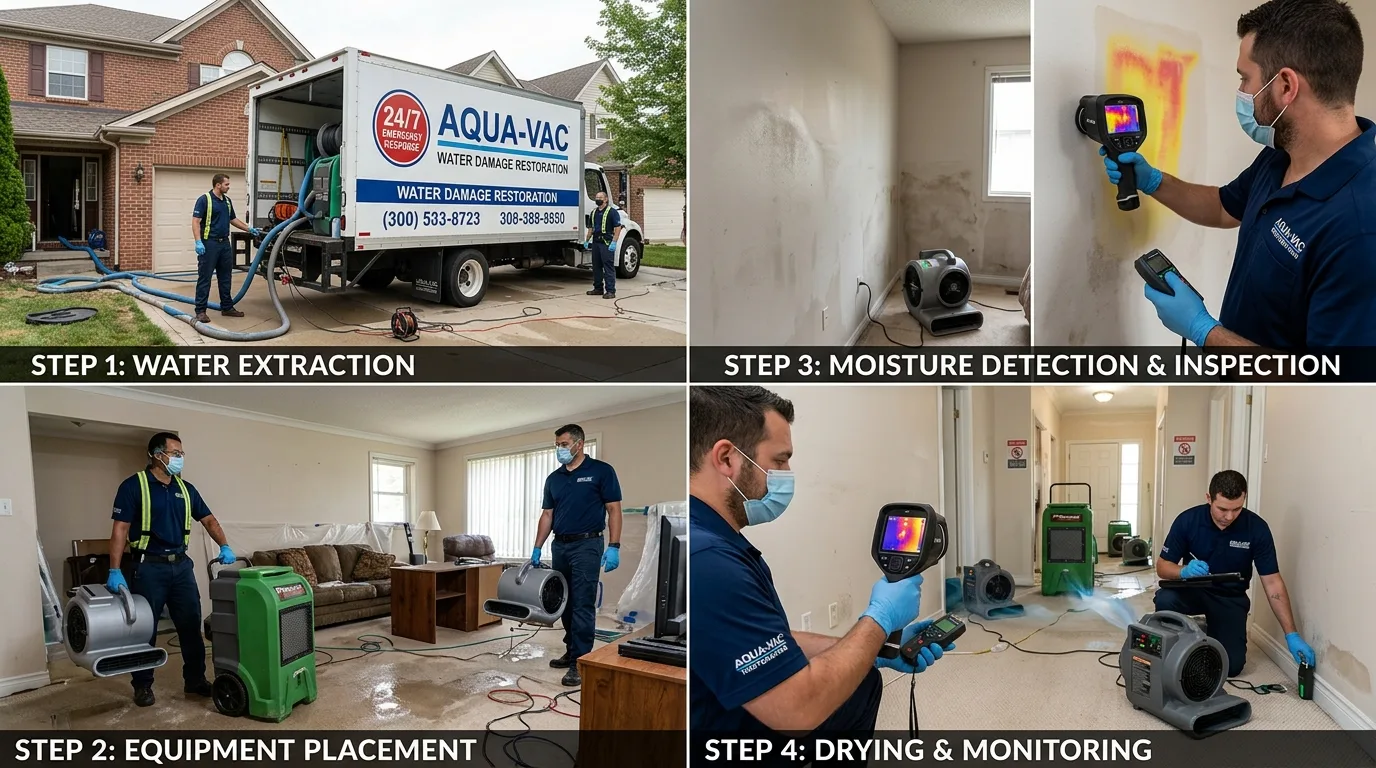
Most Jersey Village homeowners facing a water damage event have never been through the restoration process before. They know water got in, they know it needs to come out, but they don’t know what actually happens between the emergency call and moving back into a fully restored home. This post walks through every step — exactly what our team does, why each step exists, and what you’ll experience along the way.
In this post, we cover: all eight phases of the IICRC-certified restoration process, what happens during each phase in Jersey Village’s specific conditions, the typical timeline, and what your role is as the homeowner throughout.
Emergency Water Damage Response in Jersey Village
Call (877) 698-1311 immediately — we walk you through everything from the first call forward.
Why the Process Matters More Than the Equipment
Many homeowners assume water damage restoration is about having big equipment — truck-mounted extractors, industrial dehumidifiers. Equipment matters, but process matters more. A restoration company that rushes through steps or skips moisture verification can leave hidden moisture in wall cavities that causes mold colonization weeks after the job is “complete.” In Jersey Village’s high-humidity climate, where ambient conditions sustain mold growth year-round, incomplete drying is the leading cause of mold problems after water events.
The IICRC S500 Standard for Professional Water Damage Restoration defines the methodology that certified contractors follow. Every step below is part of that standard, which is why we ask for IICRC certification when evaluating a restoration contractor.
Step 1: Emergency Contact and Initial Assessment
The process begins the moment you call. Our dispatcher asks about the water source, the approximate area affected, and whether the water source has been stopped. This information determines the initial resource deployment — how many extractors, the contamination classification, and whether any safety steps (electrical shutoff, structural assessment) need to occur before crew entry.
On arrival, we assess the affected area with thermal imaging cameras that reveal temperature differentials caused by wet materials — even inside walls and under floors that appear dry from the surface. This thermal scan, combined with pin and pinless moisture meters, creates a full map of the water migration before any equipment is placed. In the Fairbanks and Northwest Crossing areas, where many homes have slab foundations, moisture migration can extend significantly beyond the visible wet area.
Step 2: Water Source Control
If the water source is still active — a burst pipe, active roof leak, or still-running appliance — it must be stopped before extraction begins. For pipe failures, this means closing the main shutoff valve or the specific fixture shutoff. We assist with this but recommend you know your shutoff locations before an emergency occurs. For storm flooding, source control isn’t possible, so we focus on protecting remaining dry areas with flood barriers and strategic equipment placement.
Step 3: Insurance Documentation
Before any material is removed or any equipment is placed, we photograph and document all affected areas, materials, and contents. This documentation includes moisture readings, photos from multiple angles, and a written scope of visible damage. This is the most important step for your insurance claim — it establishes the pre-mitigation condition of everything affected and prevents disputes about pre-existing conditions.
We notify your insurance carrier of the loss and provide the initial damage assessment documentation. Many carriers require notification within 24–72 hours of discovery, which is another reason not to delay calling.
Need Water Damage Restoration in Jersey Village?
We handle insurance documentation from the first call. Call (877) 698-1311.
Step 4: Water Extraction
Truck-mounted extractors — capable of removing hundreds of gallons per hour — begin removing standing water from all accessible areas. For carpet and padding, extraction tools press into the surface to pull water from within the material, not just from the surface. For hard flooring, surface extraction is followed by targeted drying equipment placed to pull moisture from the subfloor and structural framing below.
Emergency water removal is the most time-sensitive phase. Jersey Village’s year-round humidity and high ambient temperature mean that wet materials in an unventilated space can reach conditions favorable for mold growth within 24 hours. Every hour of extraction delay increases the depth of saturation in structural materials and the scope of material removal required.
Step 5: Content Pack-Out and Material Removal
Salvageable belongings in the affected area are inventoried and moved to a clean area for drying and cleaning — a process called content pack-out. Furnishings, electronics, and personal items are catalogued for insurance purposes.
Wet materials that cannot be dried to IICRC standards are removed. For category 1 or 2 events caught quickly, this may be limited to carpet and padding. For category 3 flood events — which are common in Jersey Village after major storm events — all porous materials below the flood line (drywall, insulation, flooring, baseboard) are removed regardless of appearance. Category 3 water cannot be safely dried in-place because the contamination remains in the material even after it appears dry.
Step 6: Antimicrobial Treatment
All exposed framing, concrete surfaces, and remaining hard materials receive EPA-registered antimicrobial treatment applied to all surfaces. This step is non-negotiable in Jersey Village’s climate — the combination of warm temperatures and high humidity creates ideal conditions for mold establishment on any surface that retains moisture. The antimicrobial treatment interrupts this process during the drying phase.
Step 7: Structural Drying
Air movers are positioned to create turbulent airflow across all wet surfaces. Industrial dehumidifiers remove moisture-laden air from the space and discharge dry air, continuously lowering the dew point. The combination of air movement and dehumidification drives moisture from structural materials into the air, where the dehumidifier captures it. Dehumidification is the core driver of effective structural drying in Jersey Village’s humid environment.
Drying continues for 3–7 days, with daily moisture readings documenting progress. IICRC drying standards define specific target moisture content levels for each material type — wood framing, concrete, drywall. Drying is not complete until all monitored materials reach their target levels across the entire affected area. We provide written moisture readings from every daily check to your insurance carrier.
Step 8: Reconstruction
After verified drying, reconstruction begins: new drywall, insulation, flooring, paint, and trim return the property to its pre-loss condition. We manage the full build-back phase — from drywall hanging and finishing through final inspection. The City of Jersey Village requires permits for reconstruction work involving structural components, and we handle all permit applications with the Vertex online portal.
What the Total Timeline Looks Like
For a typical burst pipe event in a Jersey Village home affecting one or two rooms:
- Emergency extraction: same day as call
- Material removal: day 1–2
- Drying phase: days 2–7 (monitored daily)
- Reconstruction: days 7–21 depending on scope
For a major flood event affecting the entire ground floor:
- Emergency extraction: day of or day after flooding recedes
- Material removal: days 1–3
- Drying phase: days 3–10
- Reconstruction: weeks 2–6
Frequently Asked Questions
Can I stay in my home during water damage restoration in Jersey Village?
It depends on the scope and contamination category. Category 1 and 2 events affecting isolated areas often allow occupancy in unaffected parts of the home. Category 3 events (flood, sewage) typically require temporary relocation during the extraction and demolition phase due to health risks. We advise on this during the initial assessment.
How do I know when the drying phase is truly complete?
The drying phase is complete when moisture meters confirm that all affected materials have reached IICRC target moisture levels — typically 8–12% moisture content for wood and comparable standards for other materials. “Dry to the touch” is not sufficient. We provide written documentation of all readings so you have objective verification that drying was complete before walls were closed.
Do I need to be home during the restoration process in Jersey Village?
Not necessarily — we can work with a trusted representative or key holder. However, we recommend homeowners be present for the initial assessment and insurance documentation phase to ensure you understand the scope and can answer questions from your adjuster directly.
Related resources:
- Complete guide to water damage restoration in Jersey Village
- Water damage restoration costs in Jersey Village
- Hidden signs of water damage in Jersey Village homes
Start Your Jersey Village Restoration Today
Call (877) 698-1311 for immediate emergency response. We handle every step of the process from first call through final inspection.