Hidden Signs of Water Damage in Jersey Village Homes
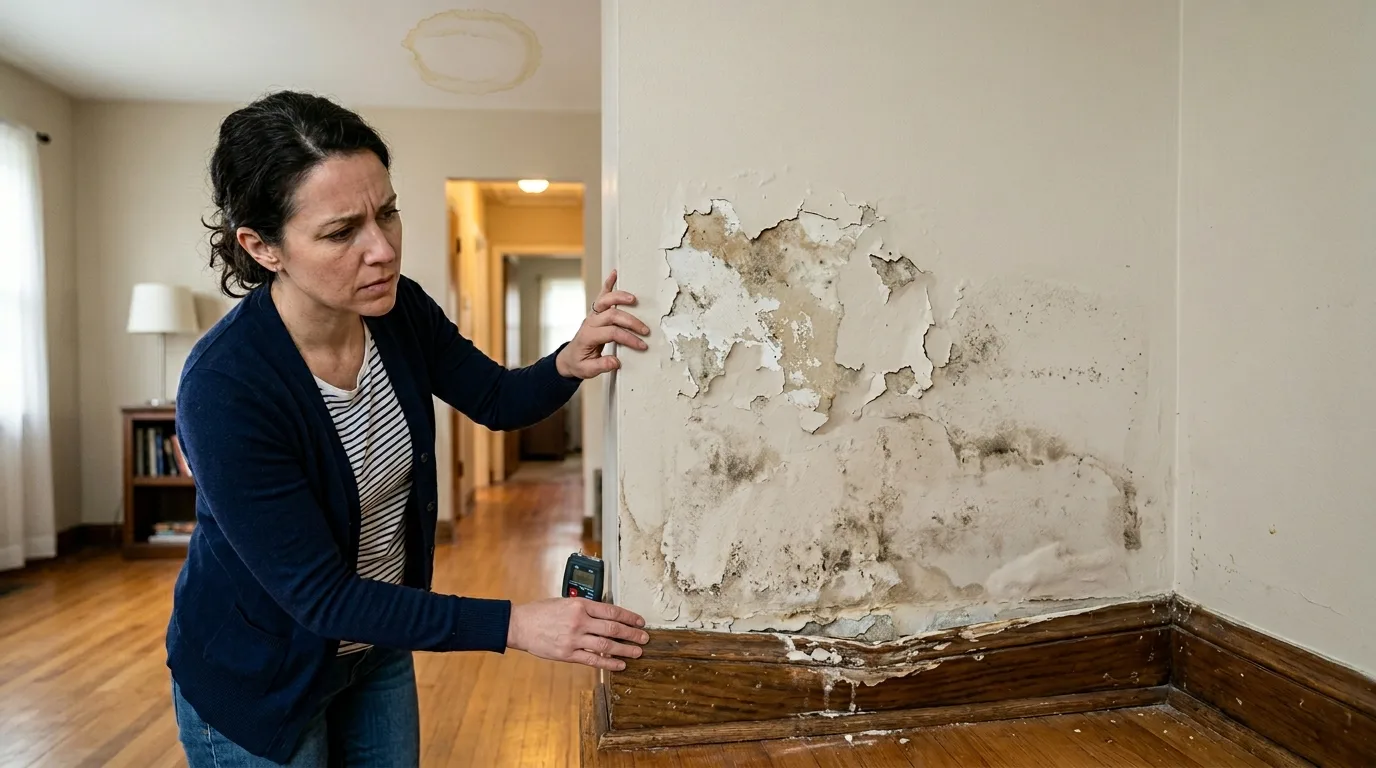
The water damage you can see is the easy part. Standing water, soaked carpet, and ceiling stains are unmistakable. The harder problem — and the more expensive one — is the water damage you can’t see: moisture trapped in wall cavities, saturating subfloor assemblies beneath tile, or slowly degrading attic framing above insulation that looks undisturbed from below. In Jersey Village’s humid climate, hidden moisture that isn’t found and addressed will produce mold within weeks and structural damage over months.
In this post, we cover: the six most reliable signs of hidden water damage in Jersey Village homes, what each sign indicates, which areas of the home are highest-risk for hidden moisture, and when to call for professional moisture detection.
Suspect Hidden Water Damage in Jersey Village?
Thermal imaging detects moisture invisible to the eye. Call (877) 698-1311 for a free assessment.
Why Hidden Water Damage Is More Common in Jersey Village Than Elsewhere
Two factors make hidden water damage disproportionately common in Jersey Village compared to most other markets. First, the Houston Black Clay soil creates pathways for water intrusion that bypass the obvious entry points. When this expansive Vertisol clay saturates during heavy rainfall, it can force moisture upward through foundation cracks and penetration gaps that are invisible without opening the slab or subfloor assembly. The resulting moisture often appears on flooring surfaces as mysterious dampness or warping without any apparent leaking pipe or roof damage.
Second, the frequency of flood events in Harris County means that many Jersey Village homes have experienced past water intrusion that was cleaned up but not completely dried — particularly following events like Harvey, where professional resources were overwhelmed and some homeowners attempted their own cleanup. Incomplete drying leaves moisture trapped in wall cavities and subfloor assemblies that persists for months or years, slowly degrading structural materials and sustaining mold growth that remains invisible until it breaches the wall surface or the floor finish fails.
The Six Signs of Hidden Water Damage
1. Musty odor without visible mold or water. This is the most reliable early indicator of hidden moisture. The volatile organic compounds produced by active mold colonies are detectable by smell before they’re visible. If a room, closet, or area of your home has a persistent earthy or musty odor that doesn’t go away with ventilation, suspect active mold growth in a wall cavity, under flooring, or in the HVAC system. The Steeplechase and Northwest Crossing neighborhoods have many homeowners who initially dismissed musty odors as “the old house smell” — and later discovered significant mold contamination in wall cavities.
2. Buckling, cupping, or soft spots in flooring. Wood flooring that has begun to cup (edges higher than center) or buckle (lifted sections) indicates moisture absorption from below — either from subfloor saturation or slab migration moisture. Tile flooring with hollow-sounding tiles when tapped indicates loss of mortar adhesion from moisture cycling below the tile. Soft spots in vinyl or laminate flooring where the surface compresses underfoot indicate subfloor moisture that has weakened the OSB or plywood below.
3. Staining or discoloration patterns. Not all ceiling stains are active leaks. Some stains represent historic leaks that appear “fixed” because the roof was repaired — but the attic insulation and ceiling drywall absorbed water that was never properly dried. Yellow-brown circular staining is the classic roof leak pattern. Staining at wall-ceiling junctions, at the base of exterior walls, or around window frames often indicates water intrusion pathways. In Jersey Village homes, staining along the base of exterior walls without an obvious leak source frequently indicates slab migration moisture from Houston Black Clay soil saturation.
4. Swelling, bubbling, or peeling interior paint or wallpaper. Paint that bubbles from the wall surface or wallpaper that separates from the substrate indicates moisture migration from inside the wall. Active moisture is pushing outward through the wall assembly. This symptom is often visible in bathrooms, exterior wall-adjacent rooms, and areas below bathrooms with plumbing fixtures.
5. Unexplained increases in water bill. A water bill that increases without a corresponding change in usage behavior indicates active water loss somewhere in the plumbing system — a slab leak, a pinhole pipe leak inside a wall, or a slow-running toilet. Slab leaks in Jersey Village are particularly common because Houston Black Clay’s shrink-swell cycles stress slab-embedded pipes over decades.
6. Doors and windows that stick or don’t close properly. This is a subtle but reliable indicator of structural moisture. When wood framing in walls or around door and window frames absorbs moisture, it swells — causing doors and windows that previously operated smoothly to stick, bind, or fail to latch. This symptom alone doesn’t confirm water damage, but combined with any other sign on this list, it warrants professional investigation.
Hidden Moisture Detected — We Can Find It
Thermal imaging and moisture mapping for Jersey Village homes. Call (877) 698-1311.
Types of Hidden Moisture: Where Professionals Look
Wall cavity moisture. The space between interior drywall and exterior sheathing is invisible to standard inspection. Thermal imaging cameras reveal temperature differentials caused by wet insulation and framing — wet materials are cooler as moisture evaporates. This technique can find water migration that entered a wall cavity from a roof leak, window failure, or pipe drip months before it would be visible as surface staining.
Subfloor assembly moisture. Moisture beneath tile, hardwood, or laminate flooring is common in Jersey Village homes following flood events or slab leaks. Pinless moisture meters can detect elevated moisture in the subfloor through flooring surfaces. Thermal imaging reveals wet subfloor areas as cool patches visible from below in basements or crawlspaces, or sometimes from above through flooring temperature differentials.
Attic insulation moisture. Roof leaks that drip into blown insulation or batt insulation may not penetrate the ceiling surface for weeks or months, during which time the wet insulation sustains mold growth above the ceiling plane. A thermal imaging scan of the attic from below can reveal the thermal signature of wet insulation without opening the ceiling.
When to Call for Professional Moisture Detection
Schedule a professional moisture assessment when:
- You’ve experienced any water event (storm, pipe, appliance) where cleanup wasn’t performed by a certified restoration company within 24 hours
- You smell musty odors in any part of the home that persist beyond a few days
- You’re buying or selling a Jersey Village home and want an independent moisture assessment
- You’ve noticed any flooring changes, paint bubbling, or staining patterns that don’t have an obvious explanation
- Your home experienced flooding during Harvey, Ike, Beryl, or any other storm event
Professional moisture assessment using thermal imaging and moisture meters costs $200–$400 for a standard residential inspection — a fraction of the cost of discovering significant hidden mold or structural moisture damage months later.
Frequently Asked Questions
Can a standard home inspector find hidden water damage in Jersey Village?
Standard home inspectors use moisture meters and visual inspection but typically don’t use thermal imaging cameras, which are the most effective tool for detecting hidden moisture. If you want a complete moisture assessment of a Jersey Village home — particularly one with a known flood history — hire a certified restoration professional with thermal imaging capability rather than relying solely on a standard home inspection.
How much does a thermal imaging moisture assessment cost in Jersey Village?
Professional moisture assessment with thermal imaging typically costs $200–$400 for a standard residential inspection in the Houston metro area. This cost is typically not covered by homeowners insurance as a preventive measure but may be covered as part of a restoration claim if water damage is confirmed.
What happens if I find hidden water damage but no active leak?
Historic moisture damage — from a past event that appeared to be cleaned up — still requires professional assessment to determine whether mold has established. The absence of an active leak doesn’t indicate the moisture has been addressed. We conduct IICRC-protocol remediation for historic moisture events as well as emergency water damage situations.
Related resources:
- How fast does mold grow after water damage in Jersey Village?
- Jersey Village mold remediation: a complete guide
- Water damage restoration in Jersey Village
Hidden Water Damage in Jersey Village — Find It Before It Finds You
Thermal imaging moisture assessments available for Jersey Village homes. Call (877) 698-1311.