How Fast Does Mold Grow After Water Damage in Jersey Village?
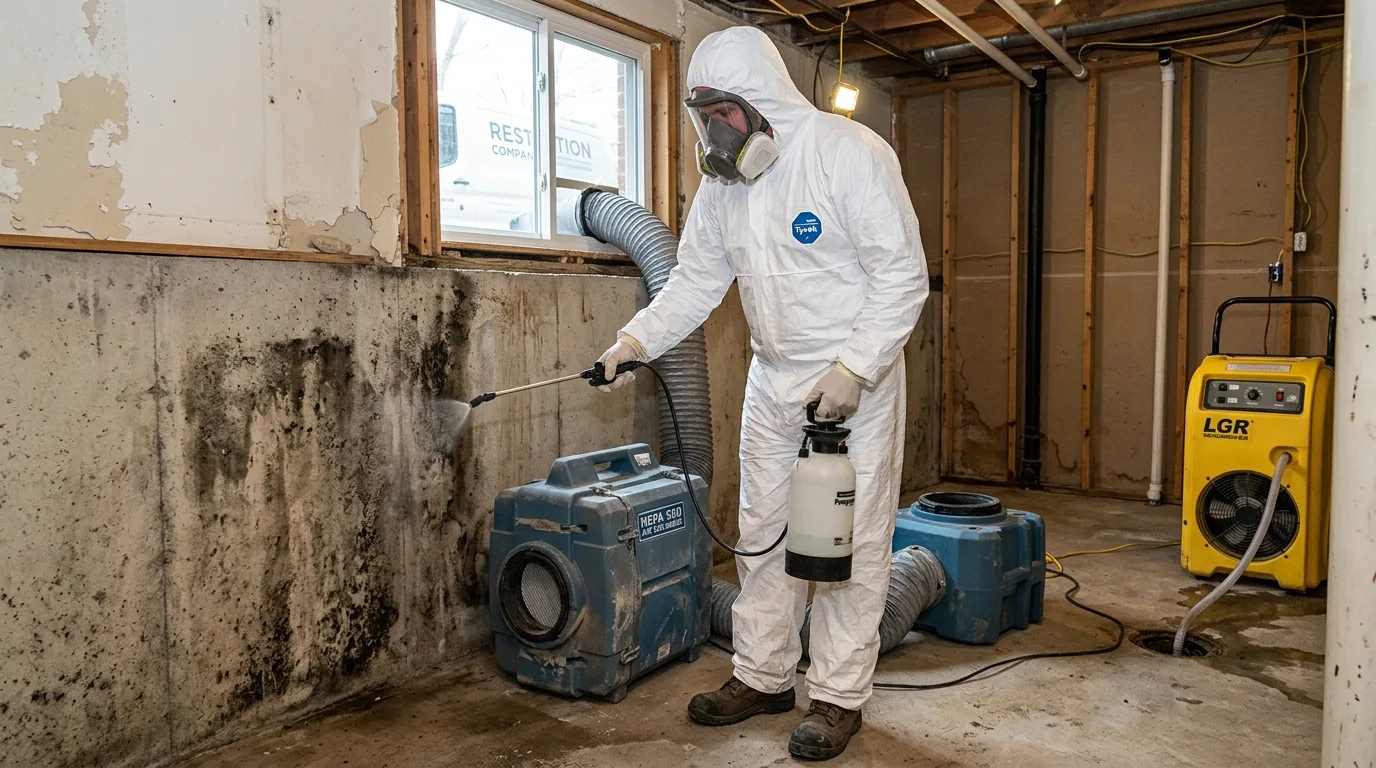
The answer is 24–48 hours — and in Jersey Village’s humidity, it may be faster. That’s how long it takes from the moment water contacts organic building materials until mold spores begin colonizing the surface. This isn’t a worst-case scenario; it’s the standard timeline in Harris County’s humid subtropical climate. Understanding why matters for every homeowner who has experienced water damage and is deciding how urgently to respond.
In this post, we cover: the science of mold growth in Jersey Village’s specific conditions, what materials are highest risk, the visible and invisible signs that mold has established, and why the 24–48 hour response window is the critical threshold for minimizing remediation costs.
Water Damage in Jersey Village? Don't Wait on Mold
Call (877) 698-1311 immediately — every hour after water damage increases mold risk.
Why Jersey Village’s Climate Accelerates Mold Growth
Mold growth requires three conditions: organic material as a food source, moisture above approximately 60% relative humidity on the material’s surface, and temperatures above approximately 40°F. All three conditions exist year-round in Jersey Village — and during the warm months from April through November, conditions are essentially ideal for rapid mold establishment.
Jersey Village’s average summer relative humidity regularly exceeds 70% during daytime hours and approaches 90% on humid nights. Indoor spaces that aren’t actively conditioned reach these humidity levels quickly. When a water event saturates drywall, wood framing, or insulation, that material’s surface humidity immediately rises to nearly 100% — the optimal condition for mold colonization. With ambient temperatures ranging from 75°F to 95°F during the height of the season, the temperature variable is also optimal.
The practical result: what takes 48–72 hours in a dry climate like Phoenix or Denver happens in 24–36 hours in a humid Houston-area summer. During the hottest, most humid weeks of July and August, mold colonization on wet drywall can begin in as little as 12–18 hours.
The Materials That Mold Colonizes First
Not all building materials present equal mold risk. Materials with high organic content and porous surface structure are colonized first:
Paper-faced drywall is the highest-risk common building material. The paper facing provides an abundant food source for Aspergillus, Penicillium, and Cladosporium — the mold species most common in Houston-area water damage events. Drywall that has been wet for 24 hours in Jersey Village’s climate should be considered high mold risk and assessed by a professional before any drying attempt.
Wood framing is colonized more slowly than drywall paper but provides an indefinite food source once mold establishes. Moisture detection is critical here because wood framing absorbs water more slowly than drywall but releases it more slowly too — creating conditions where the framing remains above mold threshold moisture levels long after the drywall appears to be drying.
Insulation — particularly fiberglass batt insulation with kraft paper facing — absorbs water readily and provides paper-sourced nutrients for mold. Wet insulation should be removed; it cannot be effectively dried in place and the moisture it retains extends the drying phase for surrounding materials.
Carpet and padding represent one of the fastest-colonizing combinations. The backing and pad material provide abundant organic food sources, and the dense fiber structure traps moisture even after surface extraction. Carpet that has been wet for more than 24 hours in the Fairbanks area or elsewhere in Jersey Village should typically be removed rather than dried in place.
Is Mold Already Growing? Get an Immediate Assessment
Thermal imaging detects hidden mold conditions before they're visible. Call (877) 698-1311.
Visible and Invisible Mold: What You Can and Can’t See
The frustrating reality of post-water-damage mold in Jersey Village is that most of it isn’t visible when it’s developing. Mold colonizes the back surface of drywall and the interior face of wall cavities — where surface inspection can’t reach — before it becomes visible as discoloration on the room-facing surface. By the time you see a black or green spot on your wall, the mold has typically been growing for days to weeks.
Signs that mold may be present after a water event, even without visible growth:
- Musty odor — the organic volatile compounds produced by active mold colonies are detectable before visible growth appears
- Discoloration at wall base or ceiling — faint staining at the base of exterior walls or along ceiling-wall junctions indicates moisture migration that may have supported mold growth
- Soft drywall — drywall that flexes or crumbles when pressed has absorbed significant moisture and is likely colonized below the surface
- Wallpaper bubbling or peeling — moisture migration behind wallpaper creates conditions for mold that are invisible until the paper separates
Thermal imaging cameras detect temperature differentials caused by evaporative cooling at wet material surfaces — revealing hidden moisture patterns that predict where mold is most likely to establish. This assessment technology, combined with air sampling, is the only reliable way to characterize mold presence in wall cavities without destructive investigation.
The Cost of Waiting: Mold’s Economic Impact
The 24–48 hour mold growth window has a direct financial consequence. Materials addressed within this window can often be dried in place — saving the cost of demolition, disposal, and reconstruction. Materials that have been wet beyond 24–48 hours in Jersey Village’s humidity, or that show any signs of mold colonization, must be removed regardless of whether they could theoretically be dried.
In practical terms for a typical jersey Village water damage event:
- Water event addressed within 4 hours: drywall often salvageable, lowest total cost
- Water event addressed at 24 hours: drywall likely needs removal, moderate cost
- Water event addressed at 72 hours: mold present in wall cavities, remediation required in addition to restoration, highest cost
The cost differential between a 4-hour response and a 72-hour response for the same square footage can easily be $3,000–$8,000 in avoided remediation and material replacement costs. This is the economic argument for calling immediately, regardless of the severity of the apparent water damage.
Frequently Asked Questions
What types of mold are most common after water damage in Jersey Village?
The most common species following water damage events in the Houston area are Aspergillus, Penicillium, and Cladosporium — the “common” molds found on building materials. Stachybotrys (often called “black mold”) develops more slowly on chronically wet cellulose materials, typically after extended moisture exposure. All types require professional remediation — species identification is important for protocol selection but doesn’t change the urgency of removal.
Can I use bleach to kill mold after water damage in my Jersey Village home?
Bleach is not effective for mold on porous building materials like drywall and wood. It addresses surface mold but doesn’t penetrate to the mold growing within the material structure. Additionally, bleach leaves residual moisture that can sustain continued growth. EPA-registered antimicrobial products applied by certified professionals are the appropriate remediation approach for water damage mold in Harris County homes.
How do I know if mold has already grown after my water damage event?
If more than 24–48 hours have passed since the water event and conditions were warm and humid — which describes any warm-season event in Jersey Village — assume mold risk is present. Schedule a professional moisture assessment with thermal imaging and air sampling before assuming the space is safe. The cost of a professional assessment ($200–$400) is far less than the cost of discovering a mold problem months later.
Related resources:
- Mold remediation in Jersey Village
- Jersey Village mold remediation: a complete guide
- Water damage restoration in Jersey Village
Mold Risk After Water Damage — Don't Wait 48 Hours
Call (877) 698-1311 immediately for emergency extraction and mold prevention. Serving Jersey Village and all of Harris County.