Hurricane Season 2026: Jersey Village Storm Damage Guide
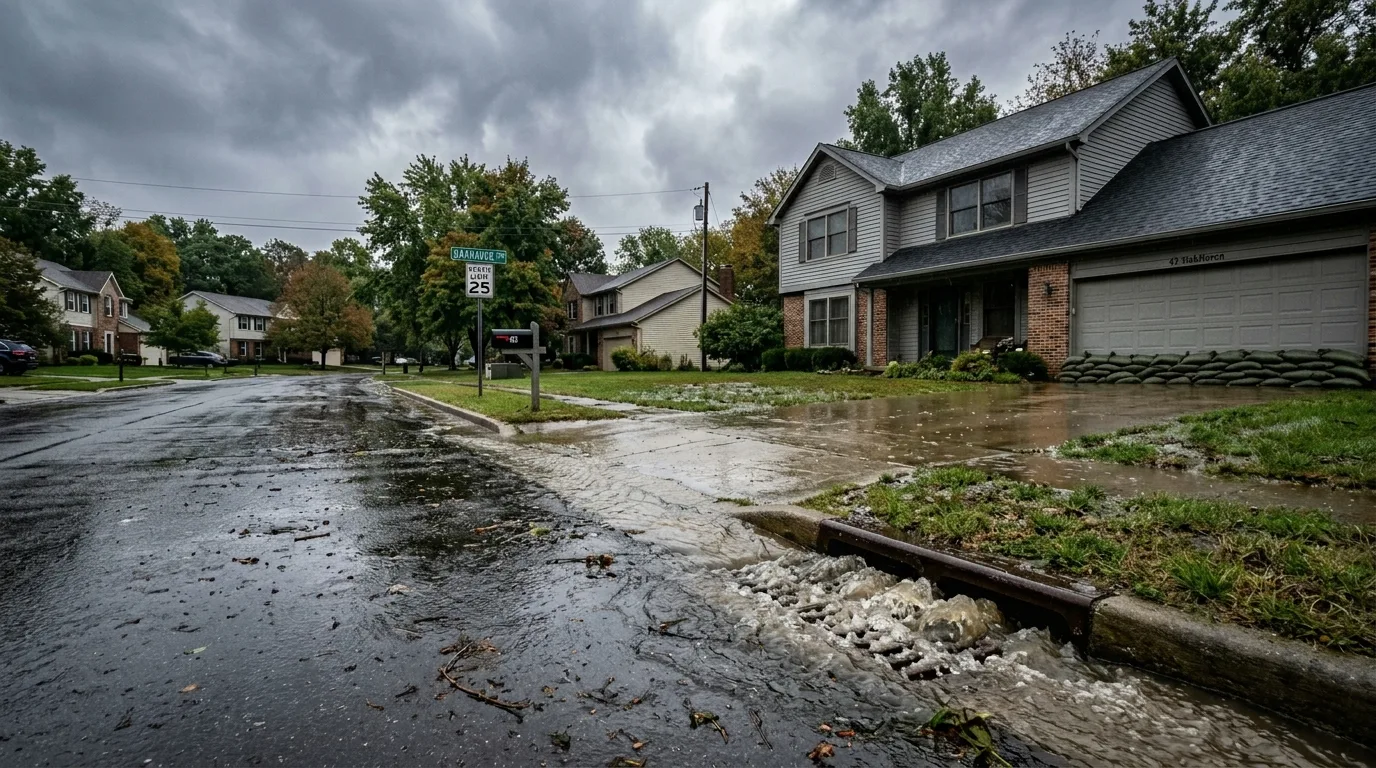
Hurricane season runs from June 1 through November 30 — and for Jersey Village homeowners, those six months represent the highest-probability period for catastrophic water damage. Harris County has experienced major flooding events from hurricanes Harvey (2017), Ike (2008), Allison (2001), and Beryl (2024). If you’re not prepared before the season begins, you’ll be scrambling in the middle of an emergency when contractor availability is at its lowest.
In this post, we cover: what storm damage risks are specific to Jersey Village, what to do before hurricane season to protect your home, how to document damage after a storm event, and how the restoration process works following storm flooding.
Storm Damage in Jersey Village? Call 24/7
Jersey Village Water Damage Restoration provides immediate hurricane and storm response. Call (877) 698-1311.
Why Jersey Village Faces Elevated Hurricane Flood Risk
Jersey Village’s location within the Addicks Reservoir and Barker Reservoir watersheds places it within a managed floodplain zone — a designation that reflects decades of flood data showing this area’s vulnerability during major storm events. The flat topography of Northwest Harris County limits natural drainage, and the Houston Black Clay soil that underlies the community absorbs water slowly during heavy rainfall events. When rain exceeds the soil’s absorption capacity — which happens quickly during tropical systems — water accumulates as surface runoff that has nowhere to go but into low-lying structures.
The spring storm season (March through May) creates a secondary risk window beyond hurricane season itself. Spring frontal systems can produce intense, localized rainfall events that overwhelm storm drainage systems and produce flash flooding throughout the Northwest Crossing and Fairbanks areas adjacent to Jersey Village. Year-round humidity means mold growth begins within 24–48 hours of water intrusion regardless of season, maintaining demand for water damage restoration even outside peak hurricane months.
Before Hurricane Season: Preparation Checklist
Roof and structure:
- Inspect and repair any missing or damaged shingles, flashing, or roof penetrations
- Clear gutters and downspouts so they drain freely away from the foundation
- Check attic insulation for signs of previous moisture intrusion (staining, musty odor)
- Verify that all exterior penetrations (pipes, electrical, HVAC) are properly sealed
Drainage and flooding:
- Walk your property after heavy rain to identify low spots where water accumulates near the foundation
- Ensure landscape grades slope away from the foundation at all points
- Test your sump pump annually — replace backup battery systems every 2–3 years
- Know where your main water shutoff is located and ensure it operates freely
Insurance review:
- Review your homeowner insurance policy annually and confirm coverage limits
- Purchase or renew NFIP flood insurance before June 1 — policies have a 30-day waiting period and cannot be purchased after a storm threatens
- Add the sewage backup rider if you don’t have it — storm events routinely cause sewage system surcharge
- Photograph all rooms and major assets annually as a pre-loss inventory
Documentation pre-work:
- Keep a copy of your insurance policy and agent contact information in a waterproof container or cloud storage
- Photograph and document the current condition of your home’s interior and exterior before storm season
During a Storm Event
- Do not drive through flooded roadways — the depth is frequently deeper than it appears and current can be deceptively strong
- If flooding begins to enter your home, move to higher ground within the structure and call for emergency assistance
- Turn off electricity to the affected areas at the breaker panel if standing water is present — do not enter standing water in areas with electrical outlets or appliances
- Document damage with photos and video as soon as it is safe to do so
Flooding in Jersey Village? Call Immediately
We provide 24/7 emergency flood response throughout Jersey Village and Harris County. Call (877) 698-1311.
After a Storm: The First 72 Hours
Call your insurance company immediately. Many policies require notification within 24–72 hours of discovery. Call your insurance company and your restoration company simultaneously — they are not competing calls. Your restoration company will provide documentation that your adjuster needs.
Do not allow anyone without IICRC certification to perform remediation. After major storm events in Jersey Village, the area sees an influx of out-of-state contractors who may be unlicensed and unfamiliar with category 3 floodwater protocols. Unlicensed remediation that skips proper material removal or moisture verification leaves contamination behind walls that causes serious health problems and expensive secondary remediation.
Document before cleanup begins. Your documentation of the pre-cleanup condition is your insurance claim evidence. Photograph every affected room from multiple angles, document the flood line height on all walls, and record any floating or displaced contents.
Begin extraction as quickly as possible. Category 3 floodwater — which is what storm flooding produces — must be extracted and all porous materials removed as quickly as possible. Every hour of contact increases pathogen exposure risk and mold colonization potential in Harris County’s humid climate.
Types and Cost of Storm Damage Common in Jersey Village
Storm flooding in Jersey Village typically involves category 3 water, which requires the most rigorous and expensive cleanup protocol:
- Category 3 mitigation: $7–$12 per square foot
- Full reconstruction: $20–$37 per square foot across Harris County
- Major storm events affecting the entire ground floor: $15,000–$50,000+ depending on home size and flood depth
NFIP flood insurance covers up to $250,000 for structural damage and $100,000 for contents. For homes with market values above these thresholds, excess flood coverage through private insurers is available.
Frequently Asked Questions
Does my homeowners insurance cover hurricane flooding in Jersey Village?
No — standard homeowners insurance does not cover flooding from external sources including hurricanes. You need a separate NFIP flood insurance policy. If you don’t have one, purchase it before June 1 — there is a 30-day waiting period that makes it unavailable once a storm threatens.
How do I find a qualified storm restoration contractor after a major hurricane in Jersey Village?
Verify IICRC certification and contractor registration with the City of Jersey Village before hiring. Be cautious of contractors who arrive door-to-door after storms — many are unlicensed. Save our number (877) 698-1311 before hurricane season so you have a qualified contractor to call immediately after a storm event.
When is hurricane season peak in Jersey Village?
Peak activity typically runs August through October, with the highest storm frequency in September. Jersey Village’s proximity to the Gulf Coast means even relatively weak tropical systems can produce significant rainfall and flooding. Spring storms (March–May) produce a secondary flood risk from frontal systems that can be equally intense on a local scale.
Related resources:
- Flood damage cleanup in Jersey Village
- Water damage restoration costs in Jersey Village
- New to Jersey Village? What every homeowner should know about flood risk
Don't Wait for the Storm — Prepare Today
Jersey Village Water Damage Restoration is available 24/7 during hurricane season. Save our number: (877) 698-1311. Serving Jersey Village and all of Harris County.