Living in Jersey Village: Homeowner's Water Damage Prevention Guide
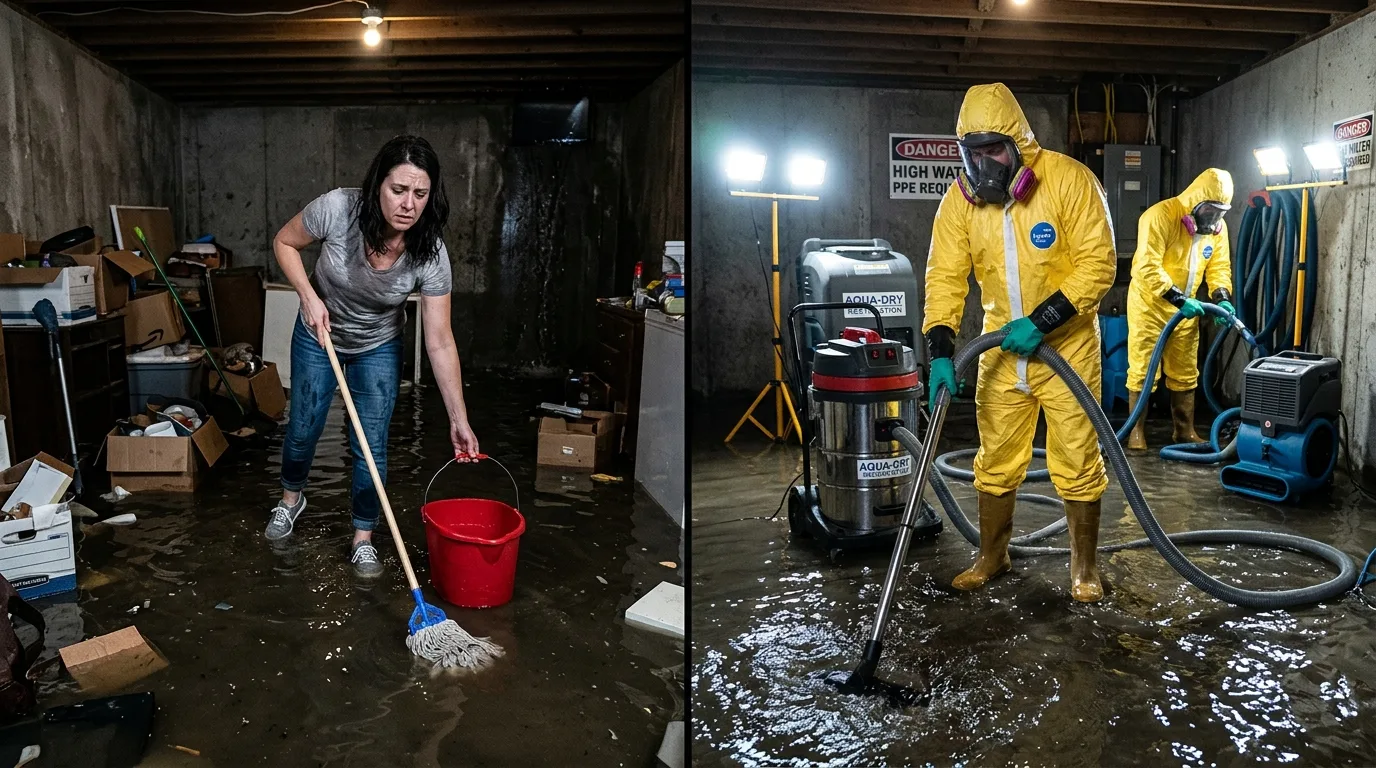
Water damage is the single most common property loss event in Jersey Village — and unlike burglary or fire, it’s a risk that most homeowners can significantly reduce through informed prevention. This guide covers what makes Jersey Village unique from a water damage perspective, and the specific steps that protect homes here in Harris County.
In this post, we cover: Jersey Village’s specific water damage risk factors, the prevention actions that matter most for this climate and soil type, what local homeowners should know about their property’s flood zone status, and when to call a professional for assessment.
Water Damage in Jersey Village? We're Available 24/7
Call (877) 698-1311 for emergency response or a free prevention assessment.
What Makes Jersey Village Different from Other Houston Suburbs
Jersey Village is a small incorporated city of approximately 7,900 residents — a tight-knit community with its own city government, its own permit requirements, and its own flood management considerations. This matters for homeowners because the City of Jersey Village has specific requirements for construction and reconstruction that differ from unincorporated Harris County. Any restoration work requires permits through the Vertex online portal, and properties in Special Flood Hazard Areas require additional floodplain development review.
The community’s location adjacent to Fairbanks and the Northwest Crossing area — neighborhoods built on the same flat, clay-heavy terrain — means that flood events don’t respect municipal boundaries. When rain events overwhelm drainage capacity, water moves across property lines and municipal boundaries based on topography, not jurisdiction. This regional flood risk is one reason FEMA flood maps designate portions of Jersey Village within flood zones that require NFIP flood insurance for federally backed mortgages.
Understanding Houston Black Clay: Jersey Village’s Hidden Water Risk
The Houston Black Clay (Vertisol soil) underlying Jersey Village is one of the least understood but most significant water damage risk factors for local homeowners. This expansive clay, rich in montmorillonite mineral content, expands 30% or more in volume when saturated — and contracts dramatically during dry periods. Over years, this shrink-swell cycle creates micro-fractures in foundation slabs and widens gaps around utility penetrations, creating pathways for water to enter living spaces even during moderate rainfall events.
Homeowners in the Steeplechase and Eldridge North areas often notice water intrusion along the base of exterior walls or at floor-wall junctions — entry points that don’t correspond to visible cracks because the gaps open only when the soil is saturated. These locations require interior drainage systems, vapor barriers, or foundation waterproofing rather than simple caulking.
The clay soil also drains slowly compared to sandy soils, meaning that surface water after heavy rain can remain standing adjacent to foundations for hours — long enough for capillary action to begin drawing moisture through the slab and into the home’s interior. This mechanism creates water damage events that don’t follow visible storms because they’re driven by accumulated soil saturation rather than direct precipitation entry.
Prevention Steps That Matter Most in Jersey Village
Grade your foundation perimeter. Ensure that landscaping and soil grade slope away from your foundation at all points, with a minimum 1/4 inch per foot drop for the first 6 feet from the foundation. Negative grade (sloping toward the house) directs surface water and downspout discharge directly against the foundation slab, accelerating water intrusion.
Maintain gutters and downspouts. Gutters that overflow during rain discharge water directly at the foundation. Clean gutters twice annually in Jersey Village — after the spring tree pollen season and after fall leaf drop. Extend downspouts at least 4 feet from the foundation using splash blocks or extension tubes.
Install or maintain a working sump pump. Many Jersey Village homes benefit from interior drainage systems in areas prone to below-grade moisture intrusion. If you have a sump pump, test it annually and replace backup batteries every 2–3 years. Power outages during storms are common in Harris County and disable sump pumps precisely when they’re needed.
Inspect and recaulk foundation penetrations annually. Pipes, conduit, and utility entries through the slab or exterior walls are common water intrusion points — especially in homes built on Houston Black Clay where foundation movement has stressed those penetrations over time. Recaulk any gaps with polyurethane exterior sealant annually.
Know your flood zone status. Check FEMA’s Flood Map Service Center for your property’s flood zone designation. Properties in Zone AE (Special Flood Hazard Area) are statistically most likely to flood during a 100-year storm event and require NFIP flood insurance for federally backed mortgages. Zone X properties have lower risk but still experience flooding during major storm events like Harvey.
Free Water Damage Prevention Assessment
We'll identify your home's specific risk factors. Call (877) 698-1311 for a free assessment.
What Jersey Village’s Climate Means for Interior Moisture Management
Hurricane season’s heat and humidity — June through November — creates interior moisture conditions that challenge homes without adequate HVAC and ventilation. Jersey Village’s average summer dew points exceed 70°F during peak season, meaning that outdoor air introduced into a conditioned space carries significant moisture load. Inadequate air conditioning, oversized AC units that short-cycle, and unventilated crawlspaces or attics all contribute to interior humidity that exceeds the threshold for mold growth on building materials.
Maintain your HVAC system annually with coil cleaning and filter replacement to ensure adequate dehumidification capacity. A properly sized and maintained air conditioning system in a Jersey Village home should maintain interior relative humidity below 60% during summer months — above that threshold, mold growth risk increases significantly on any surface with organic content.
Seasonal Prevention Calendar for Jersey Village Homeowners
February–March (pre-storm season):
- Inspect roof for missing shingles, damaged flashing, and deteriorated caulking
- Test sump pump and replace backup battery
- Service HVAC system before summer cooling season
- Clear gutters of winter debris
May–June (hurricane season prep):
- Purchase or renew NFIP flood insurance before June 1
- Walk foundation perimeter to confirm positive grade
- Confirm main water shutoff location and function
- Review and update home inventory photos
November–December (freeze prep):
- Insulate exposed attic and exterior wall pipes
- Install hose bib covers and disconnect garden hoses
- Confirm backup heat sources for power outage scenarios
Frequently Asked Questions
How do I know if my Jersey Village home is in a flood zone?
Visit FEMA’s Flood Map Service Center and enter your address. Properties in Zone AE or Zone A are in the Special Flood Hazard Area. If you’re unsure what your flood zone designation means for your insurance requirements and property risk, we can walk you through it during a free assessment.
What’s the most cost-effective water damage prevention investment in Jersey Village?
Gutters, downspout extensions, and foundation grading correction deliver the highest return on investment for most Jersey Village homes. These prevent the soil saturation conditions that create water intrusion pathways through Houston Black Clay foundations — addressing the root cause rather than just managing symptoms.
Does water damage prevention affect my homeowners insurance rates in Texas?
Some prevention measures — particularly installation of a water detection and shutoff system — can qualify for homeowner insurance discounts. Check with your carrier about available credits. NFIP flood insurance rates are determined by FEMA flood maps and cannot be negotiated but can be reduced by elevation certificate documentation.
Related resources:
- Why Houston Black Clay causes water intrusion in Jersey Village homes
- New to Jersey Village? What every homeowner should know about flood risk
- Water damage restoration in Jersey Village
Jersey Village's Local Water Damage Experts
Call (877) 698-1311 for a free prevention assessment or immediate emergency response. Serving Jersey Village and all of Harris County.